Key Takeaways
- Suction dentures use natural suction to stay in place without adhesives, making them a non-surgical and cost-effective option for patients with suitable gum structure.
- Implant dentures are anchored to dental implants in the jawbone, offering superior stability and chewing strength, especially for patients with loose lower dentures.
- The best option depends on individual factors such as bone condition, budget, and treatment preference, with suction dentures suitable for non-surgical needs and implant dentures ideal for maximum stability.
Have you ever wondered which denture option offers better stability and comfort—suction dentures or implant dentures?
For individuals who have lost multiple or all of their teeth, choosing the right denture solution is an important decision that affects daily activities such as eating, speaking, and smiling.
Modern dentistry offers several solutions to replace missing teeth, with suction dentures and implant dentures being two commonly recommended options. Both are designed to provide improved denture stability compared to traditional removable dentures, but they work in different ways and suit different patient needs.
Understanding how these dentures function, their advantages, and who they are suitable for can help patients make informed decisions about their dental care.
In this article, we will explore the key differences between suction dentures and implant dentures, how each option works, and which may be more suitable for patients in Malaysia seeking reliable denture solutions for their upper denture or lower denture needs.
What Are Suction Dentures?
A suction denture is a specialised type of full denture designed to stay securely in the mouth using natural suction between the denture base and the gum tissues. Instead of relying heavily on adhesives, suction dentures use precise impressions and advanced denture fabrication techniques to create a seal that holds the denture in place.
When properly designed, the denture forms a close contact with the gums, allowing saliva to create a natural vacuum-like effect. This suction effect helps keep the denture stable during activities such as speaking and chewing.
Suction dentures are commonly used for both upper dentures and lower dentures, although achieving suction in the lower jaw can sometimes be more challenging due to tongue movement and reduced surface area.
Key characteristics of suction dentures include:
- Customised design based on detailed gum impressions
- Natural suction effect without adhesives
- Removable denture structure
- Non-surgical solution
For patients seeking a comfortable and stable denture without undergoing surgery, suction dentures may be a suitable option.
What Are Implant Dentures?
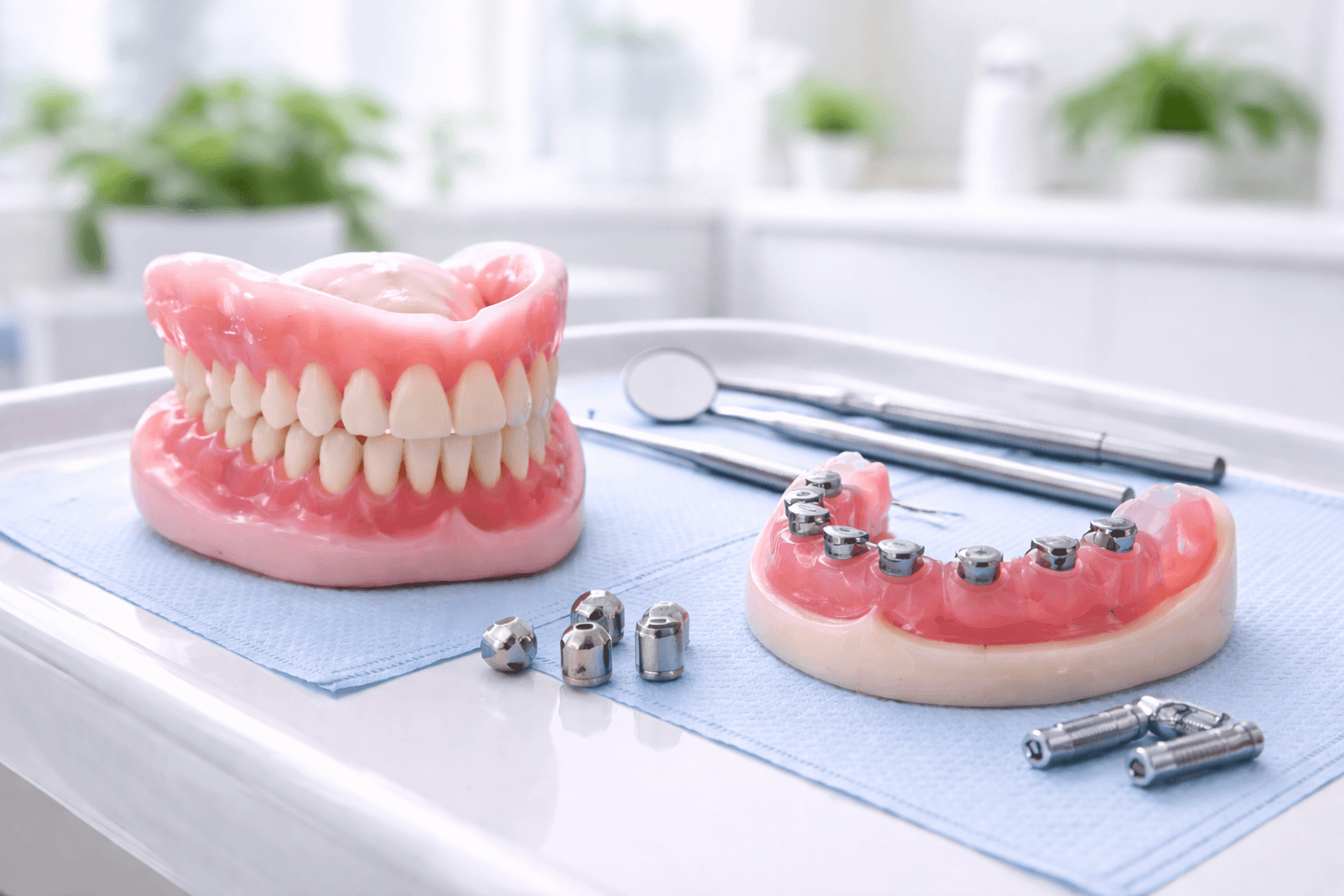
Implant dentures, also known as implant-supported dentures, are dentures that are anchored to dental implants placed in the jawbone. Dental implants are small titanium posts surgically inserted into the jawbone, where they act as artificial tooth roots.
Once the implants integrate with the bone through a process known as osseointegration, the denture is attached to the implants using connectors. This provides a much stronger foundation compared to traditional dentures.
Implant dentures are often recommended for patients who want maximum stability and chewing strength. They can be designed as either removable overdentures or fixed dentures.
Features of implant dentures include:
- Implant anchors placed in the jawbone
- Strong retention and stability
- Reduced denture movement
- Improved chewing function
Implant dentures are particularly beneficial for patients who experience severe denture instability with conventional dentures.
How Do Suction Dentures Work?
Suction dentures rely on precise denture fabrication and proper oral anatomy to function effectively. The denture base is carefully designed to follow the contours of the patient’s gums and surrounding tissues.
Several factors contribute to the success of a suction denture:
1. Accurate Dental Impressions
Dentists take highly detailed impressions of the gums to ensure that the denture fits closely against the oral tissues.
2. Border Seal
The edges of the denture create a seal that prevents air from entering between the denture and the gums. This seal allows the suction effect to form.
3. Saliva Layer
A thin layer of saliva between the denture and gum tissues helps maintain the suction effect and stabilises the denture.
When these elements are properly combined, the denture remains stable without requiring adhesives.
How Do Implant Dentures Work?
Implant dentures function through a completely different mechanism. Instead of relying on gum contact and suction, they are secured using dental implants that are anchored directly into the jawbone.
The treatment process typically includes:
- Dental implant placement
- Healing and bone integration period
- Attachment of the denture to the implants
Once the implants fuse with the bone, they provide a solid foundation that supports the denture.
Implant dentures can significantly reduce denture movement and improve chewing efficiency.
What Are the Key Differences Between Suction Dentures and Implant Dentures?
Understanding the differences between these two options can help patients choose the most suitable solution for their dental needs.
Suction Denture Treatment Procedure
- Non-surgical treatment
- Custom denture fabrication
- Typically completed within several dental visits
Implant Denture Treatment Procedure
- Requires oral surgery for implant placement
- Healing period required before final denture attachment
- Treatment duration may take several months
Suction Denture Stability
- Stability relies on suction between denture and gums
- Works well when gum anatomy supports a strong seal
Implant Denture Stability
- Denture is anchored directly to implants
- Provides higher stability and minimal movement
Suitability for Upper Denture and Lower Denture
Upper dentures generally achieve stronger suction due to the larger surface area of the upper palate.
Lower dentures are often more challenging because of tongue movement and smaller bone support.
Implant dentures are often recommended for lower dentures when stability becomes difficult to achieve with suction dentures alone.
1. Cost
Cost can vary depending on the treatment complexity.
Suction dentures typically cost less because they do not require surgical procedures.
Implant dentures involve:
- Implant surgery
- Additional materials
- More complex treatment planning
As a result, implant dentures generally have higher treatment costs.
2. Maintenance
Both types of dentures require proper care to maintain oral health.
For suction dentures:
- Daily denture cleaning is required
- Regular dental check-ups are recommended
For implant dentures:
- Special cleaning around implants is important
- Periodic dental reviews help maintain implant health
Which Option Is Better for Upper Dentures?
The upper denture is often more suitable for suction denture techniques because the upper palate provides a large surface area that helps create a strong suction seal.
Many patients find that a well-designed suction upper denture can offer excellent stability and comfort without requiring implants.
However, implant-supported upper dentures may still be recommended for patients who want additional security or have difficulty maintaining suction.
Which Option Works Better for Lower Dentures?
The lower denture is typically more difficult to stabilise due to the smaller surface area and constant tongue movement.
For patients who struggle with loose lower dentures, implant-supported dentures may provide better stability.
In many cases, dentists may recommend placing two or more implants to support a lower denture, significantly improving retention and chewing ability.
Who Is Suitable for Suction Dentures?
Suction dentures may be suitable for patients who:
- Have healthy gum tissue
- Have sufficient jawbone shape to create suction
- Prefer a non-surgical treatment option
- Want a removable denture solution
Patients with well-formed gum ridges often achieve better suction denture results.
Who Is Suitable for Implant Dentures?
Implant dentures may be recommended for patients who:
- Have severe denture instability
- Want stronger denture support
- Have sufficient jawbone for implants
- Are comfortable undergoing minor oral surgery
Dental implant treatment may also be considered when conventional dentures cannot provide adequate stability.
Choosing the Right Denture Option in Malaysia
When deciding between suction dentures and implant dentures, patients should consult a qualified dental professional who can evaluate their oral condition and recommend the most suitable treatment.
Dental clinics in Malaysia now offer advanced denture solutions designed to improve comfort, functionality, and long-term oral health.
Factors that influence the choice of treatment include:
- Gum condition
- Bone structure
- Patient preferences
- Budget considerations
A personalised treatment plan helps ensure the best possible results.
Conclusion
Both suction dentures and implant dentures offer effective solutions for replacing missing teeth, but they differ in terms of treatment approach, stability, and suitability.
Suction dentures provide a non-surgical option that uses natural suction to stabilise removable dentures, making them suitable for many patients who want improved comfort without implants.
Implant dentures, on the other hand, offer maximum stability by anchoring the denture directly to dental implants, which may be particularly beneficial for patients with unstable lower dentures.
By consulting with an experienced dental professional in Malaysia, patients can determine whether suction dentures or implant dentures are the best solution for restoring their upper denture or lower denture function, improving both confidence and overall oral health.
Need expert advice on suction dentures or implant dentures?
Consult a qualified dental specialist in Penang at Family Dental Clinic to find the most suitable solution for your dental needs. Our team offers modern dental treatments designed to improve both comfort and oral health.