Key Takeaways
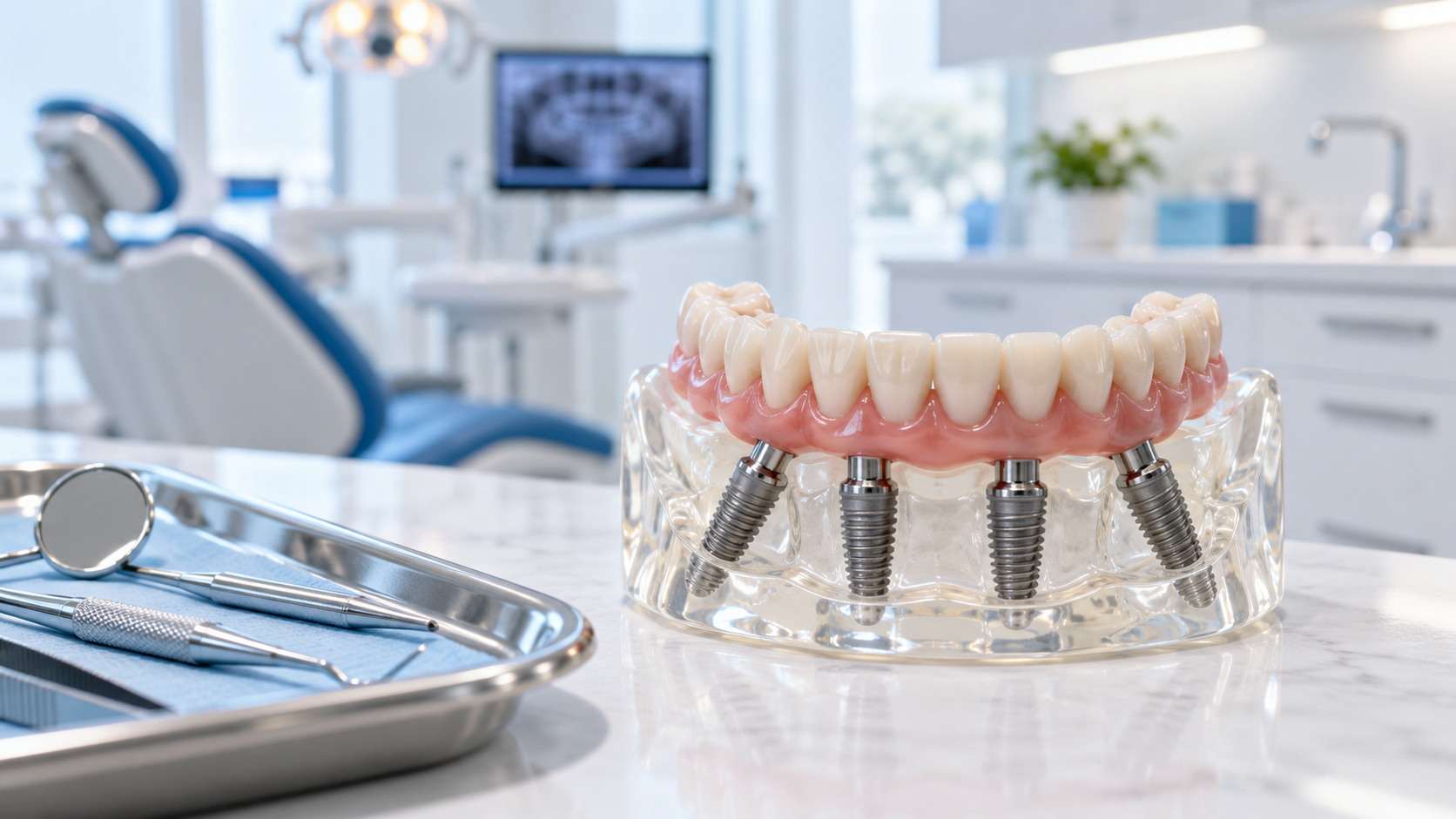
- All-on-4 replaces a full arch of missing or failing teeth using just four implants, two placed straight at the front and two angled at the back, supporting a fixed, non-removable bridge.
- Most patients leave with a temporary set of teeth on the same day as surgery, with the final permanent bridge fitted after the implants fully fuse with the bone, typically around 3 to 6 months later.
- Reported costs in Malaysia vary quite widely, roughly from the mid five figures to around RM50,000 per arch, so this really is a case where a personal quotation matters more than any published figure.
- The angled back implants are designed to make use of existing bone, which often means bone grafting can be avoided even for patients who've lost a fair amount of bone over time, though this still depends on individual assessment.
If you've lost most or all of your teeth in one jaw, or you're finding dentures uncomfortable or unstable, All-on-4 is one of the options worth understanding properly before deciding what's next. Here's what it actually involves.
What Is All-on-4 Dental Implant?
All-on-4 dental implant is a full-arch tooth replacement technique that uses four titanium implants to support an entire set of replacement teeth as a single fixed bridge. Two implants are placed upright at the front of the jaw, where bone tends to be denser, and two are placed at an angle toward the back, which helps maximise contact with available bone and often avoids the need for a separate bone grafting procedure.
How the Procedure Works
Treatment generally unfolds over a few stages. It starts with a consultation involving x-rays and imaging to assess bone structure and plan implant positions. On surgery day, any remaining unsuitable teeth are removed, the four implants are placed, and a temporary fixed bridge is fitted the same day, so patients generally leave with functional teeth rather than an empty gap.
Over the following months, the implants gradually fuse with the jawbone in a process called osseointegration, and once that's complete, generally around 3 to 6 months later, the final, permanent bridge is fitted.
Who Is All-on-4 Generally Suitable For?
All-on-4 tends to suit people who have lost most or all of their teeth in a jaw, who are struggling with loose or uncomfortable dentures, or who want a fixed alternative that doesn't need to be removed for cleaning. Good general health, manageable gum health, and a willingness to maintain oral hygiene afterwards all matter for long-term success.
Smoking, uncontrolled diabetes, or significant bone loss can complicate candidacy, though this doesn't necessarily rule the treatment out; it's something your dentist will assess individually.
What Does All-on-4 Cost in Malaysia?
Reported pricing for All-on-4 in Malaysia varies considerably, with figures ranging from around the mid five figures up to roughly RM50,000 per arch, depending on the implant brand used, the bridge material (acrylic versus ceramic or zirconia, for example), and what's included in the package.
Because the spread between reported prices is genuinely wide, this is one area where getting a personal quotation after an assessment is far more useful than relying on any published number.
Note: The prices above are for general reference only and do not reflect our clinic's treatment fees. A personalised quotation can be provided after a dental assessment.
Main Benefits of All-on-4 Dental Implants
A fixed, non-removable result.
Unlike dentures, the bridge is secured to the implants, so there's no need to take it out for cleaning or worry about it shifting while eating or speaking.
Restored chewing ability.
Most patients regain chewing strength close to that of natural teeth, which is a noticeable step up from the limitations many people experience with dentures.
Teeth on the same day as surgery.
A temporary fixed bridge is generally fitted immediately after the implants are placed, so there's no period of being without teeth while healing takes place.
Jawbone preservation.
Because the implants integrate with the bone the way natural tooth roots do, All-on-4 generally helps maintain jawbone structure over time, something dentures don't do.
Often avoids bone grafting.
The angled placement of the rear implants makes efficient use of existing bone, which frequently means patients who might otherwise need a bone graft for individual implants can avoid that extra step.
Things to Consider Before Choosing All-on-4
It's a surgical procedure.
Unlike dentures, All-on-4 involves surgery and a recovery period, so it's a bigger commitment both physically and in terms of planning.
The upfront cost is significant.
Even at the lower end of reported pricing, it represents a considerably larger investment than dentures, and this is a genuine factor for many patients to weigh.
Healing takes time.
While temporary teeth are fitted immediately, a softer diet during initial healing and a multi-month wait for the final bridge are part of the process.
Not automatically suitable for everyone.
Uncontrolled diabetes, heavy smoking, active gum disease, or significant bone loss can complicate candidacy, though this is assessed individually rather than being an automatic disqualifier.
Ongoing maintenance matters.
Long-term success depends on consistent oral hygiene and regular dental checkups, generally at least twice a year, not just on the surgery itself.
How Long Do All-on-4 Implants Last?
This question has two slightly different answers, and it's worth separating them. The titanium implants themselves, once properly integrated with the jawbone, are generally designed to last decades, and studies following patients over time have reported success rates around 98% at five years and 95% at ten years.
The visible bridge on top, however, is a separate component with its own lifespan, and it typically needs replacement or refurbishment somewhere around the 10 to 15 year mark, depending on the material used and how it's cared for.
A few factors tend to influence how long everything lasts in practice: consistent oral hygiene at home, the density and health of the jawbone supporting the implants, lifestyle factors such as smoking or poorly controlled diabetes, the skill and experience of the dental team placing the implants, and the quality of the materials used for both the implants and the bridge.
Regular checkups, generally every six months, give your dentist the chance to catch and address small issues before they affect the implants' longevity.
Recovery: What to Expect
Most patients return to light daily activity within a day of surgery, with a softer diet recommended for the first few weeks while initial healing takes place. The temporary bridge allows normal eating and speaking well before the final restoration is ready.
Full integration of the implants with the bone generally takes 3 to 6 months, after which the permanent bridge is fitted, bringing the total process from first consultation to finished result to roughly 4 to 7 months in most cases.
Frequently Asked Questions
Is All-on-4 the same as regular dental implants?
Not quite. Regular implants typically replace individual teeth, one implant per tooth, while All-on-4 uses just four implants to support an entire arch of replacement teeth as one fixed bridge.
Will I be without teeth during the healing period?
Generally no. Most patients receive a temporary fixed bridge on the same day as surgery, so there's usually no period of being without teeth, even while the permanent bridge is still being prepared.
Do I need a bone graft for All-on-4?
Often not, since the angled back implants are specifically designed to use available bone more efficiently, but this still depends on an individual assessment of your jawbone.
How long does an All-on-4 restoration last?
The implants themselves are generally designed to last decades with good care, while the bridge on top typically needs replacement or refurbishment around the 10 to 15 year mark, depending on material and maintenance.
Is All-on-4 right for me if I already wear dentures?
It's worth discussing with a dentist, particularly if you find your dentures uncomfortable, loose, or difficult to manage, since All-on-4 is often considered by patients looking for a fixed alternative.
Considering All-on-4? Let's Talk It Through
Full-arch treatment is a significant decision, and it deserves an unhurried conversation rather than a quick answer. At Family Dental, we'll walk through your bone structure, your health history, and what matters most to you before recommending anything.
Contact us to arrange an assessment and get a clear, personalised picture of your options.