Key Takeaways
- Composite fillings (white fillings) typically last 5–10 years, but wear, pressure, and oral habits can cause them to weaken or fail over time.
- Common signs that a filling needs replacement include cracks, chipping, sensitivity, or pain, which may indicate gaps or decay beneath the filling.
- Timely replacement is essential to prevent further tooth damage or infection, as failing fillings can allow bacteria to enter and worsen decay.
When to Replace Composite Fillings?
Composite fillings, also known as white or tooth-coloured fillings, are a popular choice for repairing cavities because they blend seamlessly with your natural smile. While durable, they don't last forever. Daily chewing, grinding, and exposure to food and drink can cause them to wear down, crack, or lose their seal over time. Knowing how to spot the early warning signs of a failing filling is crucial for protecting your tooth from further decay or damage.
This guide will walk you through the common signs that your filling needs attention, explain its typical lifespan, and detail what to expect during the replacement process
What Is a Composite Filling?
A composite filling is a tooth-coloured restorative material made from a mixture of resin and fine glass particles. It is commonly used to repair cavities, minor fractures, or worn enamel and is suitable for both front and back teeth.
Modern dentistry also uses bulk fill composite, an advanced type of composite material that allows deeper layers to be placed in a single increment, reducing chair time while maintaining strength and durability.
Beyond fillings, their versatility allows them to be used for cosmetic bonding to close gaps, as a luting agent to cement crowns and veneers, or for core build-ups to support a new crown.
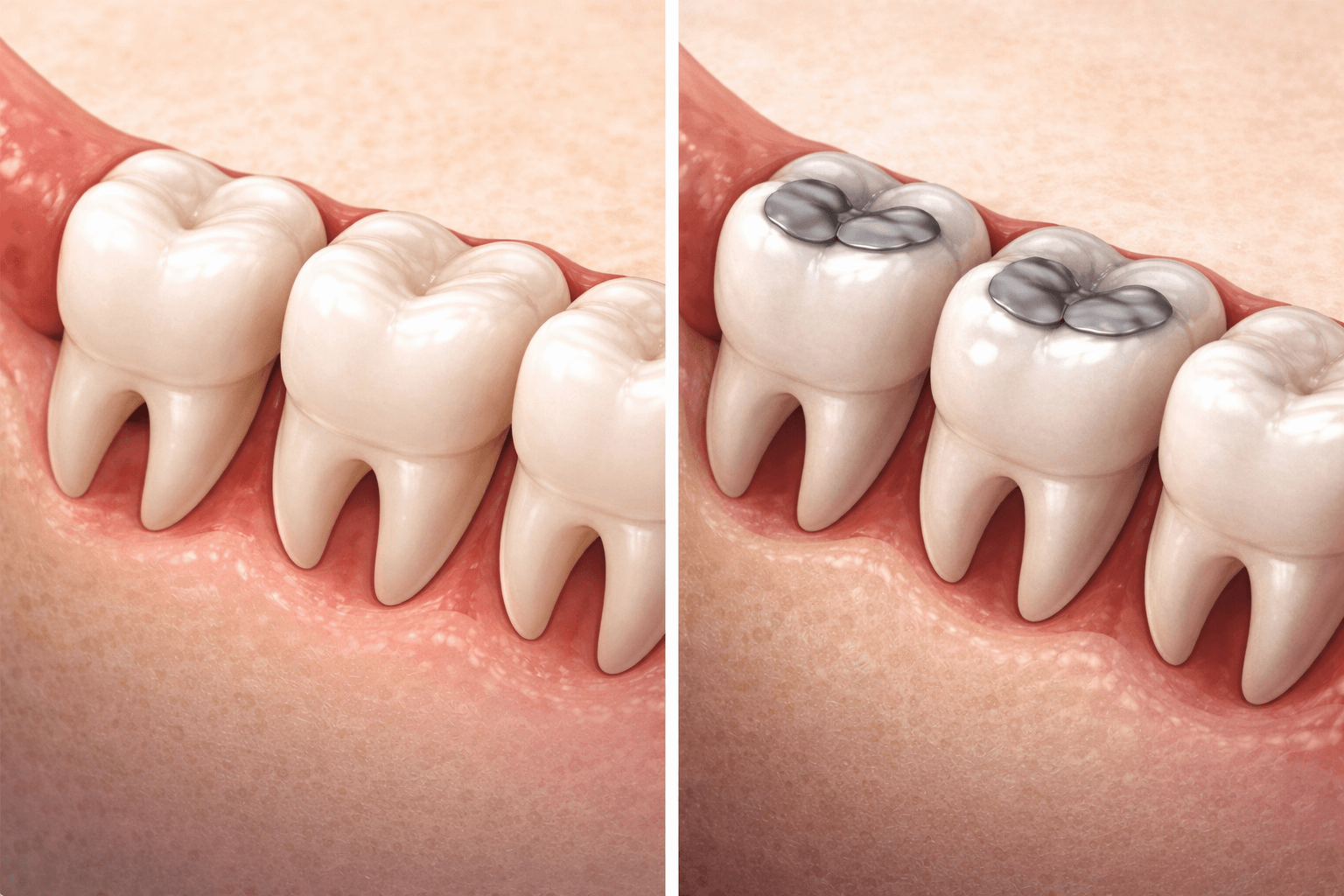
Composite Filling vs. Amalgam
Choosing between composite and amalgam fillings involves trade-offs in aesthetics, durability, and cost.
- Composite (White Filling):
- Appearance: Tooth-coloured, offering a natural look.
- Preparation: Bonds directly to the tooth, preserving more healthy tooth structure.
- Durability: Strong but may wear out faster than amalgam, especially in large cavities or on chewing surfaces.
- Cost: Generally more expensive than amalgam.
- Amalgam (Silver Filling):
- Appearance: Silver-coloured and highly visible.
- Preparation: Requires more of the healthy tooth to be removed to create a secure fit.
- Durability: Extremely durable and can last 10-15 years or longer.
- Cost: Typically a more affordable filling option.
Advantages and Considerations of Composite Fillings
When considering composite fillings, it may be helpful to review their general characteristics:
Advantages:
- Aesthetics: Composite materials can be matched to the natural shade of teeth, making them less visible.
- Conservative Preparation: The material bonds directly to the tooth structure, which may allow for preservation of more natural tooth compared to some alternatives.
- Versatility: They can be used to treat cavities as well as minor chips and cracks in both front and back teeth.
- Mercury-Free: Composite fillings do not contain mercury.
Considerations:
- Durability: While durable, they may have a shorter lifespan than some other materials, particularly in areas exposed to higher chewing forces.
- Cost: Composite fillings are generally more expensive than amalgam fillings.
- Staining: The material may discolor over time due to exposure to substances such as coffee, tea, or tobacco.
- Procedure Time: Placement can be more technique-sensitive and may take longer compared to some other filling types.
How Long Do Composite Fillings Last?
On average, composite fillings last 5 to 10 years, depending on:
- Bite force and chewing habits
- Location of the filling
- Oral hygiene practices
- Quality of the original placement
- Use of bulk fill composite versus traditional layering
For individuals with a higher risk of cavities, the lifespan of a composite filling may be shorter. This is because new decay can develop at the margins (the edge where the filling meets the natural tooth). If this occurs, the seal is compromised, allowing bacteria to leak underneath and necessitating a replacement sooner.
Regular dental check-ups are crucial to monitor the condition of fillings before problems arise.
Common Signs Your Composite Filling Needs Replacement
1. Visible Cracks or Chipping
Composite material can fracture over time, especially in molars that endure heavy chewing forces. Small cracks may not be painful initially but can allow bacteria to seep underneath the filling.
Why it matters: Cracks compromise the seal between the filling and the tooth, increasing the risk of decay beneath the restoration.
2. Tooth Sensitivity
Sensitivity to hot, cold, or sweet foods may indicate:
- Marginal gaps between the filling and tooth
- Wear of the composite material
- Exposure of underlying dentine
Persistent sensitivity should never be ignored, as it may signal that the filling is no longer functioning properly.
3. Discolouration Around the Filling
Although composite fillings resist staining better than older materials, they can still discolour over time. Dark edges or yellowing around a white filling may suggest leakage or ageing material.
This is particularly noticeable in visible teeth, where aesthetics are important.
4. Pain When Biting or Chewing
Pain during chewing may occur if:
- The filling has shifted
- There is a crack in the filling or tooth
- The bite is no longer properly balanced
Such discomfort often indicates structural issues that require prompt assessment.
5. Rough or Uneven Surface
A composite filling should feel smooth and natural. If you notice roughness with your tongue, it may be due to surface wear or partial breakdown of the material.
Rough surfaces also attract plaque more easily, increasing the risk of secondary decay.
6. Recurring Decay Around the Filling
Composite fillings do not decay, but the surrounding tooth structure can. If bacteria enter through microscopic gaps, decay may develop underneath the filling without obvious symptoms.
If decay is left untreated long enough to reach the tooth's nerve, it may require root canal treatment rather than a simple filling replacement.
This is one of the most common reasons fillings need replacement.
7. Filling Falling Out or Feeling Loose
A filling that feels loose—or has fallen out completely—requires immediate dental attention. Leaving the tooth unprotected can lead to rapid decay or sensitivity.
Potential Risks and Post-Procedure Expectations
The most common side effect is temporary post-operative sensitivity to hot, cold, air, or pressure. This occurs because the procedure can temporarily irritate the tooth's nerve. It typically subsides on its own within a few days to a few weeks. Using a toothpaste designed for sensitive teeth and avoiding extreme temperatures can help manage discomfort during this period.
Composite vs Bulk Fill Composite: Does It Affect Longevity?
Bulk fill composite materials are designed to:
- Cure more deeply
- Reduce internal stress
- Improve durability in posterior teeth
When placed correctly, bulk fill composites can offer comparable longevity to traditional composite fillings, particularly for larger cavities.
However, even advanced materials still require monitoring over time.
How Dentists Assess Whether a Filling Needs Replacement
Dentists rely on several methods:
- Visual examination
- Dental X-rays
- Bite assessment
- Sensitivity testing
Not all worn fillings require immediate replacement—some may only need polishing or minor adjustment. A professional evaluation ensures the most conservative and appropriate treatment.
It's important to note that not every imperfection requires a full replacement. For example:
- Superficial Staining: Surface stains from coffee or tea can often be polished away during a routine cleaning.
- Minor Wear: Slight wear that doesn't compromise the filling's seal or cause sensitivity may simply be monitored.
- Slight Roughness: A dentist can often smooth and re-polish a slightly rough filling without replacing it. A professional evaluation will determine the most conservative and appropriate course of action.
The Composite Filling Procedure: Step-by-Step
Getting a composite filling is a straightforward process typically completed in one visit. Here’s what you can expect:
- Numbing and Preparation: Your dentist will numb the area with a local anaesthetic. Any decay is then carefully removed, and the tooth is cleaned and isolated to keep it dry.
- Etching and Bonding: The tooth surface is treated with a mild acidic gel to create microscopic pores. A bonding agent is then applied, which seeps into these pores to create a strong foundation for the filling.
- Layering and Curing: The composite resin is applied in thin layers. After each layer is placed, a special high-intensity blue light is used to harden, or 'cure,' the material.
- Shaping and Polishing: Once the cavity is filled, the dentist will shape the composite to match the natural contours of your tooth and ensure your bite is correct. Finally, the filling is polished to a smooth, natural-looking finish.
What Factors Influence the Cost of a Composite Filling?
The cost of a composite filling is not one-size-fits-all and can vary based on several important factors:
- Size and Location of the Cavity: Larger fillings or those on molars, which require more material and time to place, typically cost more than small fillings on front teeth.
- Number of Fillings: Addressing multiple cavities in a single appointment may affect the overall cost.
- Dental Insurance Coverage: The amount your insurance plan covers for restorative procedures will significantly impact your out-of-pocket expense.
- Geographic Location: Dental fees can differ between cities and regions.
Because of these variables, it's best to get a precise quote from your dentist after an examination.
What Happens During a Composite Filling Replacement?
The procedure typically involves:
- Removing the old composite or amalgam material
- Cleaning the underlying tooth structure
- Assessing for decay or cracks
- Placing new composite or bulk fill composite
- Shaping and polishing for a natural bite
The process is usually completed in one visit and is performed under local anaesthesia for comfort.
While most composite fillings are direct restorations completed in one visit, certain special circumstances may require a second appointment. This is common for larger cavities that need an inlay or onlay. In these cases, an impression of the tooth is taken and sent to a dental lab to fabricate the restoration, which is then bonded in place during a subsequent visit.
Can Old Amalgam Fillings Be Replaced with Composite?
Yes. Many patients choose to replace amalgam fillings with composite for aesthetic or functional reasons. This decision should be made after discussing:
- Tooth strength
- Bite forces
- Cavity size
- Long-term durability
Replacement should only be done when clinically appropriate, not purely for cosmetic reasons.
How to Extend the Life of Your Composite Fillings?
Patients can help prolong filling lifespan by:
- Practice Meticulous Brushing and Flossing: Brush twice daily with fluoride toothpaste and floss at least once a day, paying special attention to the margins where the filling meets the tooth to prevent plaque buildup and secondary decay.
- Manage Biting Forces: Avoid chewing on ice, hard candies, or using your teeth to open packages, as these actions can crack or chip the composite material.
- Address Teeth Grinding (Bruxism): If you grind your teeth, especially at night, wear a custom-fitted night guard to protect your fillings from excessive pressure.
- Limit Staining and Acidic Foods: Reduce consumption of coffee, tea, red wine, and acidic foods and drinks that can stain the filling or weaken the bond over time.
- Attend Regular Dental Check-ups: Professional cleanings and exams every six months allow your dentist to spot and address minor issues with your fillings before they become major problems.
When to See a Dental Dentist?
You should schedule a dental visit if you experience:
- Persistent pain or sensitivity
- Visible damage to a white filling
- Changes in bite or chewing comfort
- Discolouration around a filling
Early intervention often prevents more extensive and costly treatments.
Final Thoughts
Composite fillings are a reliable, aesthetic solution for restoring teeth, but they are not permanent. Recognising the early signs of wear or failure allows timely replacement, preserving tooth structure and preventing complications.
A professional dental assessment ensures your fillings continue to protect your teeth effectively—supporting long-term oral health and comfort.
If you suspect your filling may need attention, schedule a consultation with our dental specialist today. Visit our clinic in Gurney Paragon or Georgetown for a composite filling assessment.