Key Takeaways
- Orthodontic treatment corrects misaligned teeth and jaw issues, improving both aesthetics and oral function such as chewing and speech.
- Common treatment options include braces and clear aligners (Invisalign), each designed to gradually move teeth into proper alignment based on individual needs.
- Beyond cosmetic benefits, orthodontics improves long-term oral health, making teeth easier to clean and reducing risks of cavities, gum disease, and jaw problems.
Have you ever wondered how orthodontic treatment can transform not only your smile but also your overall dental health?
Many people experience issues such as crooked teeth, bite problems, or crowded teeth, yet they may not fully understand how modern orthodontic solutions can correct these conditions effectively.
Today, orthodontic treatment has evolved significantly, offering a variety of options that go beyond traditional metal braces. From advanced teeth braces to discreet dental braces, patients now have access to treatments designed to improve both function and appearance. Orthodontic care focuses on correcting the alignment of teeth and jaws, helping patients achieve a healthier bite and a more confident smile.
In this article, we will explore what orthodontic treatment is, the different types of braces available, how the treatment process works, and the benefits of seeking care from an experienced orthodontist in Malaysia.
What Is Orthodontic Treatment?
Orthodontic treatment is a specialised area of dentistry that focuses on diagnosing, preventing, and correcting misaligned teeth and jaw structures. The treatment typically involves the use of braces, aligners, or other dental appliances to gradually move teeth into the correct position.
An orthodontist is a dentist who has undergone additional training in tooth alignment and bite correction. Their goal is not only to improve the appearance of a patient’s smile but also to enhance oral function and long-term dental health.
Orthodontic treatment can help correct several common dental issues, including:
- Crooked or crowded teeth
- Overbite or underbite
- Crossbite
- Gaps between teeth
- Jaw alignment problems
By correcting these issues, orthodontic treatment can significantly improve both aesthetics and oral health.
Why Is Orthodontic Treatment Important?
Many people associate orthodontic treatment primarily with cosmetic improvements. While straighter teeth certainly enhance appearance, the benefits go far beyond aesthetics.
Properly aligned teeth contribute to better oral hygiene and overall dental health. When teeth are crowded or overlapping, they become more difficult to clean, increasing the risk of plaque buildup, tooth decay, and gum disease.
Orthodontic treatment can also improve:
- Bite function
- Speech clarity
- Chewing efficiency
- Jaw comfort
Correcting bite issues early can prevent more serious dental complications in the future.
What Are the Different Types of Teeth Braces?
Modern orthodontic treatment offers several types of teeth braces designed to suit different patient needs and preferences.
1. Traditional Metal Braces
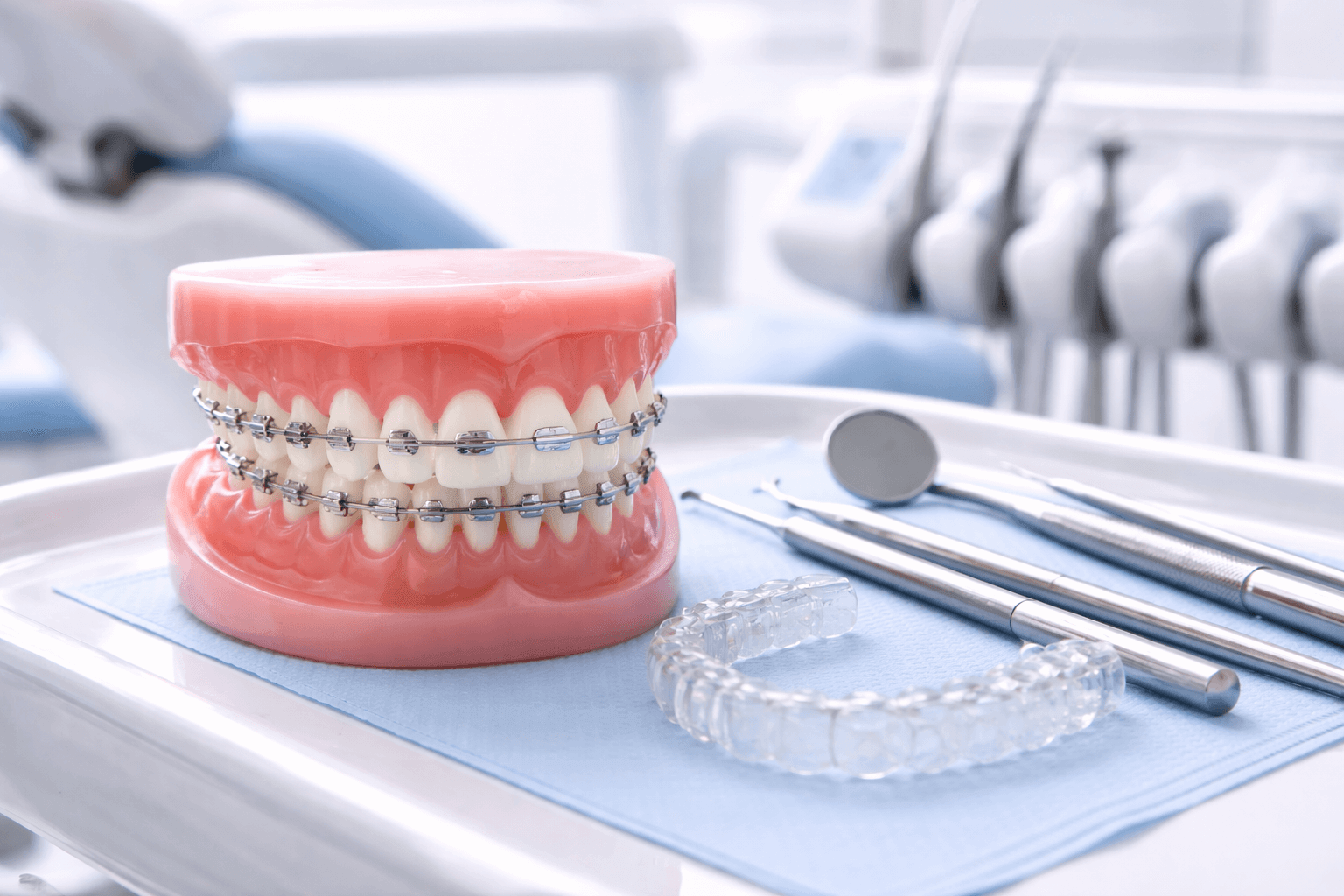
Traditional metal dental braces are one of the most widely used orthodontic treatments. They consist of metal brackets attached to each tooth and connected by a wire that gradually moves the teeth into alignment.
Metal braces remain popular because they are highly effective for correcting complex alignment issues.
Benefits include:
- Reliable results
- Suitable for severe cases
- Cost-effective compared to other options
Although they are more visible than other braces, modern designs are smaller and more comfortable than earlier versions.
2. Ceramic Braces
Ceramic braces function similarly to metal braces but use tooth-coloured or clear brackets. This makes them less noticeable, making them a popular choice for adults or teenagers who prefer a more discreet orthodontic treatment.
Advantages include:
- More aesthetic appearance
- Effective for moderate to complex cases
However, ceramic braces may require more care to prevent staining.
3. Self-Ligating Braces
Self-ligating braces use specialised brackets that hold the wire in place without elastic bands. This design allows the braces to move teeth more efficiently and may reduce friction during treatment.
Benefits include:
- Potentially shorter treatment time
- Fewer orthodontic visits
- Improved comfort
Self-ligating braces are increasingly used by orthodontists due to their efficiency.
4. Clear Aligners
Clear aligners are removable orthodontic devices made from transparent plastic that gradually shift teeth into position. They are an alternative to traditional braces and are popular among adults seeking a nearly invisible treatment.
Advantages include:
- Discreet appearance
- Removable for eating and cleaning
- Comfortable design
However, clear aligners may not be suitable for all complex orthodontic cases.
What Is the Process of Orthodontic Treatment?
Orthodontic treatment involves several stages to ensure that teeth are aligned correctly and safely.
1. Initial Consultation
The first step is a consultation with an orthodontist in Malaysia, who will evaluate the patient’s dental condition. The orthodontist will examine the teeth, gums, and jaw alignment to determine whether braces or other orthodontic solutions are needed.
Diagnostic tools such as X-rays, photographs, and dental impressions may be used to create a detailed treatment plan.
2. Treatment Planning
Once the orthodontist has assessed the patient’s dental structure, a customised treatment plan is developed. This plan outlines:
- The type of braces recommended
- Estimated treatment duration
- Expected outcomes
Each patient’s treatment plan is tailored to their specific dental needs.
3. Placement of Braces or Aligners
If braces are recommended, the orthodontist will attach brackets to the teeth and connect them with orthodontic wires. These wires apply gentle pressure that gradually moves the teeth into the desired position.
For clear aligners, patients will receive a series of aligners designed to progressively shift teeth over time.
4. Adjustment Visits
Throughout the treatment period, patients will need to visit the orthodontist regularly for adjustments. During these appointments, the orthodontist may tighten wires, replace elastics, or provide the next set of aligners.
These adjustments ensure that the teeth continue moving according to the treatment plan.
5. Retention Phase
Once the teeth have reached their final position, the orthodontist will provide a retainer. Retainers help maintain the new alignment and prevent teeth from shifting back to their original positions.
Patients are usually required to wear retainers for a specified period to ensure long-term results.
Who Should Consider Orthodontic Treatment?
Orthodontic treatment can benefit people of all ages. While braces are commonly associated with teenagers, many adults are now seeking orthodontic care to improve their smiles and oral health.
Orthodontic treatment may be recommended for:
- Children with developing bite problems
- Teenagers with crowded or misaligned teeth
- Adults seeking cosmetic or functional improvements
Early orthodontic evaluation can help identify potential issues before they become more severe.
What Are the Benefits of Orthodontic Treatment?
Orthodontic treatment provides a wide range of benefits beyond simply straightening teeth.
1. Improved Dental Health
Straighter teeth are easier to clean, reducing the risk of plaque buildup, cavities, and gum disease.
2. Better Bite Function
Correcting bite issues improves chewing efficiency and reduces strain on the jaw.
3. Enhanced Confidence
A straighter smile can boost self-confidence and improve overall appearance.
4. Prevention of Future Dental Problems
Addressing alignment issues early can help prevent complications such as uneven tooth wear, jaw pain, and speech difficulties.
Choosing an Orthodontist in Malaysia
Selecting the right orthodontist in Malaysia is an important step in achieving successful treatment outcomes.
When choosing an orthodontic provider, patients should consider:
- The orthodontist’s experience and qualifications
- Available treatment options
- Clinic facilities and technology
- Personalised treatment plans
Many dental clinics in Malaysia now offer advanced orthodontic solutions that combine modern technology with personalised patient care.
Conclusion
Orthodontic treatment plays an essential role in improving both the appearance and function of your smile. With advancements in modern dentistry, patients today can choose from a variety of options, including traditional teeth braces, ceramic dental braces, and clear aligners.
By correcting misaligned teeth and bite issues, orthodontic treatment supports better oral hygiene, improved dental function, and increased confidence.
With the guidance of an experienced orthodontist in Malaysia, patients can achieve long-lasting results and maintain healthy, well-aligned teeth for years to come.
Looking for professional orthodontic treatment in Malaysia?
At Family Dental Clinic, our experienced dental team provides personalised orthodontic care, including teeth braces and modern dental braces solutions, to help you achieve a healthier and more confident smile.
Book a consultation today to learn more about the best orthodontic treatment options for your dental needs.
Frequently Asked Questions About Orthodontic Treatment
- How long does orthodontic treatment usually take?
The duration of orthodontic treatment varies depending on the complexity of the case. In most situations, treatment with teeth braces or clear aligners takes between 12 to 24 months. Minor alignment corrections may require less time, while more complex bite issues may take longer to achieve optimal results.
- Are dental braces painful?
Patients may experience mild discomfort when dental braces are first placed or after adjustment appointments. This is normal and usually lasts only a few days as the teeth begin to shift into position. Modern orthodontic technology has made braces more comfortable than in the past.
- Can adults get teeth braces?
Yes, adults can receive teeth braces or clear aligners to correct dental alignment issues. In fact, adult orthodontic treatment is becoming increasingly popular in Malaysia as more people seek to improve their smile and dental health.