Your dentist has just told you that you need a filling — and now you have a choice to make: composite or amalgam? If you're not sure what the difference is, you're not alone. These two materials look different, behave differently, and come at different price points. Here's everything you need to know to make a confident decision.
Key Takeaways
- Amalgam fillings are silver-coloured, highly durable, and suited for back teeth that bear heavy chewing pressure — they typically last 10 to 15 years
- Composite fillings are tooth-coloured, mercury-free, and require less drilling — they generally last 5 to 10 years and are ideal for visible or smaller cavities
- Composite fillings cost more in Malaysia (RM150–RM400 per tooth) compared to amalgam (RM80–RM150 per tooth)
- Amalgam contains mercury, but the amount released is considered safe by major dental health bodies — however, it is generally avoided for children and pregnant women
- Your dentist's recommendation will depend on which tooth is affected, the size of the cavity, and your personal preferences
- Old amalgam fillings can be replaced with composite for aesthetic or personal reasons
What Is a Dental Filling and Why Do You Need One?
When bacteria erode the enamel surface of a tooth, the resulting cavity needs to be cleaned out and filled — otherwise, the decay continues to spread, potentially reaching the nerve and requiring more extensive treatment like a root canal.
Dental fillings restore the tooth's structure, prevent further decay, and allow you to bite and chew normally again. The two most commonly used materials in Malaysia today are amalgam (the traditional silver filling) and composite (the newer, tooth-coloured alternative).
What Is an Amalgam Filling?
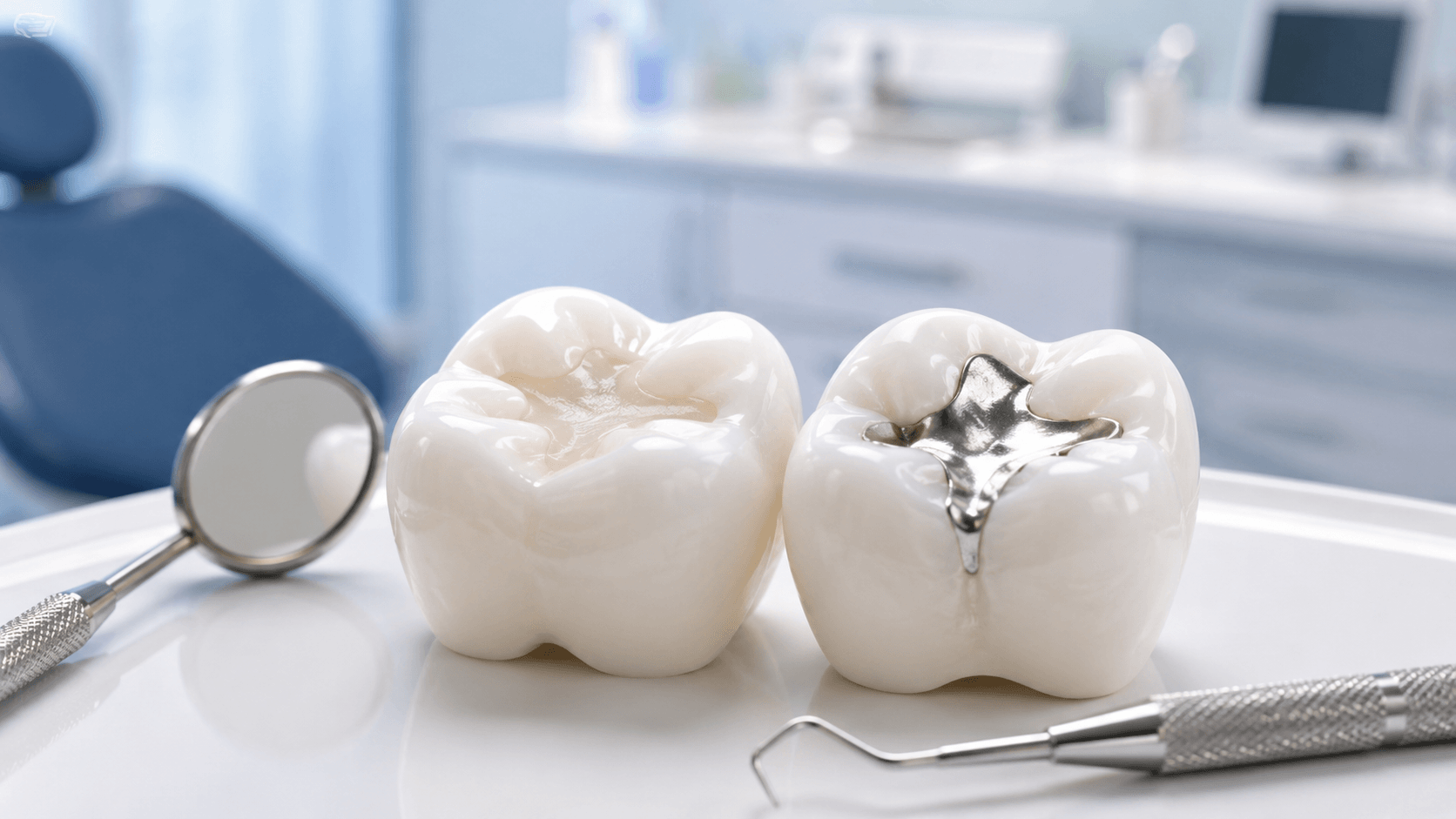
Amalgam has been used in dentistry for over 150 years. It is a mixture of metals — typically silver, tin, copper, and mercury — that hardens into a strong, durable surface once placed in the tooth.
Because amalgam is mechanically locked into the cavity rather than chemically bonded, it requires slightly more drilling to create the right shape for the filling to stay in place. The end result is a silver-coloured restoration that is clearly visible, particularly in back teeth.
Despite its appearance, amalgam remains widely used because of its exceptional durability. In areas of the mouth that endure significant chewing force — such as the lower molars — amalgam's strength is difficult to match.
What Is a Dental Composite Filling?
A composite filling is made from a mixture of resin and finely ground glass particles. Unlike amalgam, composite bonds chemically directly to the tooth surface — meaning less healthy tooth structure needs to be removed during preparation.
Once placed, composite is shaped and hardened using a curing light. The final result blends naturally with the surrounding tooth colour, making it virtually indistinguishable from natural enamel. This is why composite fillings are sometimes referred to as tooth-coloured fillings or white fillings.
Because composite does not conduct temperature as readily as metal, patients often report less thermal sensitivity — less of that sharp sting when drinking something cold — compared to amalgam fillings.
Amalgam vs Composite: Key Differences at a Glance
| Feature | Amalgam | Composite |
|---|---|---|
| Appearance | Silver-coloured | Tooth-coloured |
| Material | Metal alloy (includes mercury) | Resin and glass particles |
| Durability | 10–15 years | 5–10 years |
| Drilling required | More (mechanical lock) | Less (chemical bond) |
| Strength | Very high — good for molars | Moderate — good for smaller cavities |
| Mercury content | Yes | No |
| Cost in Malaysia | RM80–RM150 per tooth | RM150–RM400 per tooth |
| Best for | Back teeth, large cavities | Front teeth, visible areas, smaller cavities |
Which Filling Is Better for Which Tooth?
The location of the cavity plays a significant role in determining the better material.
Front teeth and visible areas: Composite is almost always the preferred choice. The tooth-coloured finish means no visible grey or silver when you smile or talk — something amalgam simply cannot provide.
Back teeth and molars: Amalgam has traditionally been favoured here due to its superior resistance to the heavy, repeated pressure of chewing. That said, modern composite materials have improved considerably, and many dentists now use composite in back teeth as well — particularly for small to medium-sized cavities.
Large cavities: When a significant amount of the tooth structure has been lost to decay, amalgam's strength becomes a practical advantage. Your dentist will assess the size of the cavity and advise accordingly.
👉 Tip: If you're unsure which material is right for your tooth, ask your dentist to walk you through the options before the procedure. A good dentist will always explain the reasoning behind their recommendation.
What About Safety? The Mercury Question
It is completely reasonable to ask about mercury before agreeing to an amalgam filling. The mercury in amalgam is not in a free, liquid form — it is chemically bound within the metal alloy, which significantly limits the amount that enters the body.
Major dental health organisations, including the American Dental Association (ADA), state that amalgam fillings are safe for most adults. The levels of mercury vapour released during normal use fall well below established safety thresholds.
That said, amalgam is generally not recommended for:
- Children under 15
- Pregnant women or those planning to become pregnant
- Patients with kidney problems
- Those with mercury allergies
If any of these apply to you, composite — or another mercury-free alternative — is the appropriate choice. Let your dentist know about any relevant medical history before your filling appointment.
How Much Does a Dental Filling Cost in Malaysia?
Tooth filling Malaysia costs vary depending on the material, the size of the cavity, and the clinic.
As a general guide:
- Amalgam fillings: RM80–RM150 per tooth
- Composite fillings: RM150–RM400 per tooth
The higher cost of composite reflects both the material itself and the more technique-sensitive placement process — composite must be applied in thin layers, each cured with light, which takes more time than placing amalgam.
Private clinics like Family Dental in Penang provide transparent pricing during consultation so you know exactly what to expect before any procedure begins. Government dental clinics offer highly subsidised rates but typically use amalgam as the default material.
Can I Replace My Old Amalgam Fillings with Composite?
Yes — and it is something many patients choose to do, either for aesthetic reasons or out of personal preference for a mercury-free option.
The process involves removing the existing amalgam filling and replacing it with composite. This is a routine procedure for an experienced dentist, though it is worth noting that some additional drilling may be required to prepare the cavity for the bonding-based composite material.
Whether replacement is advisable depends on the condition of the existing filling and the surrounding tooth. If your amalgam filling is old, showing cracks, or has developed secondary decay around the edges, replacement makes practical sense. If the filling is intact and functioning well, your dentist may advise leaving it in place to avoid unnecessary removal of healthy tooth structure.
👉 Thinking about switching? Discuss your options with your dentist at your next check-up — they can assess the condition of your existing fillings and advise whether replacement is clinically appropriate.
Which Filling Should You Choose?
There is no single correct answer — it depends on your individual situation. Here is a simple guide:
Choose amalgam if:
- The cavity is in a back molar subject to heavy chewing
- Budget is a primary concern
- The cavity is large and requires high-strength material
Choose composite if:
- The tooth is visible when you smile or talk
- You prefer a mercury-free material
- You want less drilling and a more conservative preparation
- The cavity is small to medium in size
Ask your dentist if:
- You are pregnant, a child patient, or have relevant health conditions
- You are considering replacing existing amalgam fillings
- You have concerns about either material before committing
Ready to Discuss Your Filling Options?
Whether you need your first filling or you're reconsidering an older restoration, the best starting point is a conversation with a dentist who can assess your specific situation. At Family Dental, we take the time to explain your options clearly — no jargon, no pressure — so you can make the decision that is right for you.
Book a consultation with us and let us help you find the best path to a healthier smile. Explore our full range of dental treatments to learn more about what we offer.
Giving you more reasons to smile.