Key Takeaways
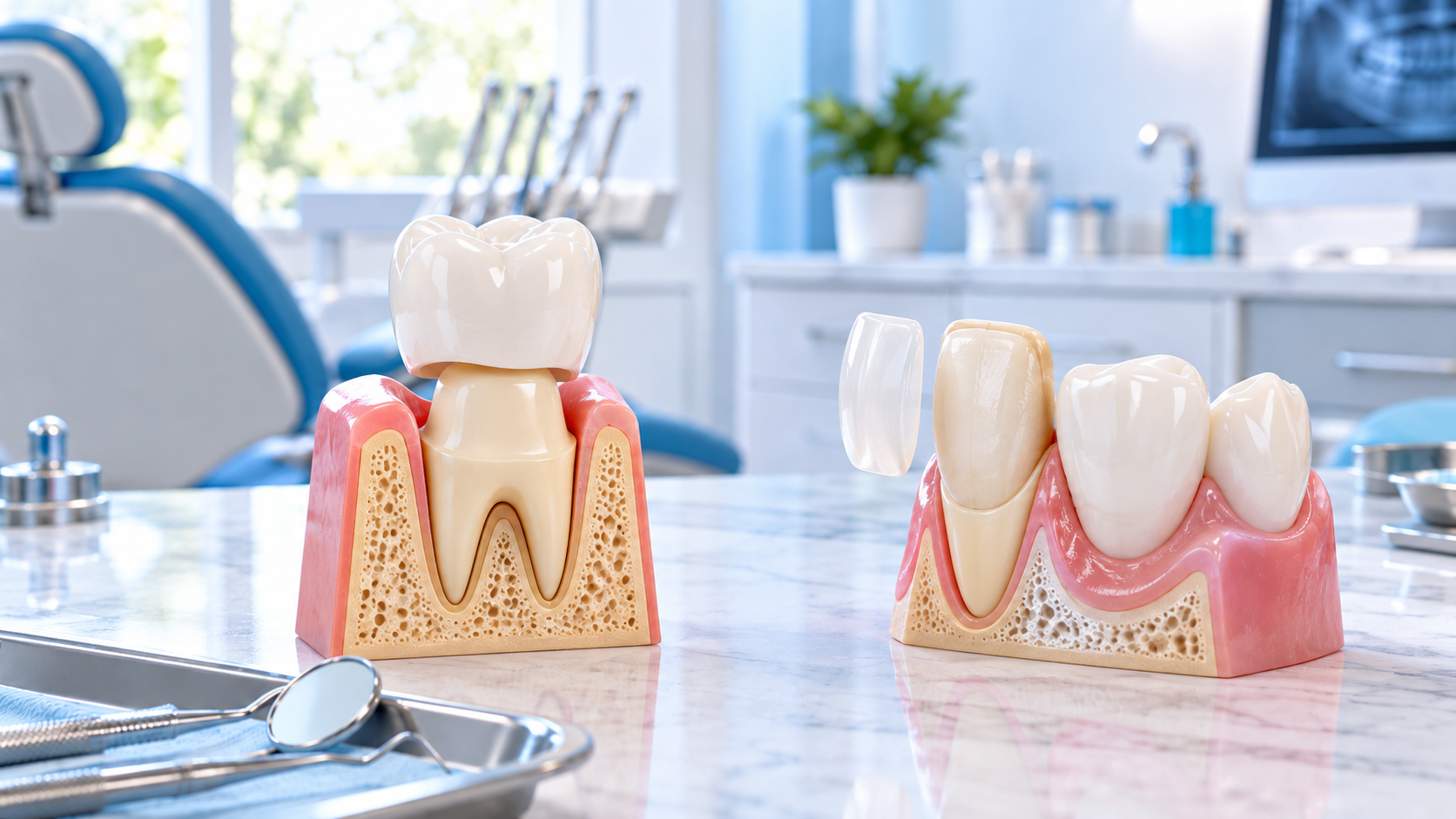
- A crown covers the entire visible tooth and is generally used to restore strength to a damaged, decayed, or weakened tooth, while a veneer covers only the front surface and is generally used to improve the appearance of an otherwise healthy tooth.
- Veneer preparation is much more conservative, removing a thin layer from the front surface only, compared to a crown, which requires reshaping the tooth all the way around to fit a full cap.
- At Family Dental, porcelain veneers are priced at RM1,500 to RM2,200 per tooth and composite veneers at RM400 to RM800, while crowns generally range from RM800 to RM2,500 per tooth depending on material.
- Neither option is "better" in general, the right choice depends on whether the tooth needs structural protection or primarily a cosmetic improvement.
It's a common point of confusion: both crowns and veneers can make a tooth look better, so how do you know which one you actually need? The honest answer is that they're usually solving different problems, and understanding that difference makes the decision much clearer.
What Is a Dental Crown?
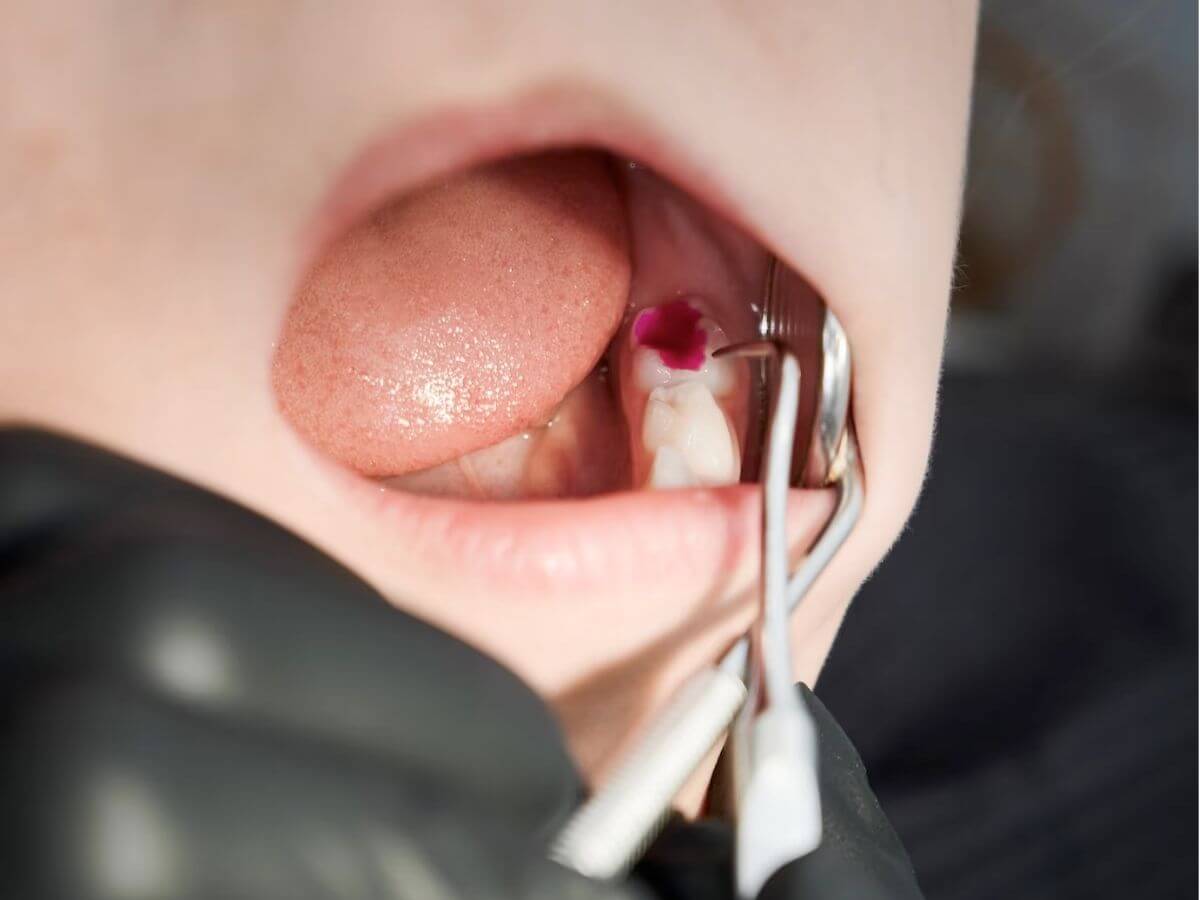
A dental crown is a cap that covers the entire visible portion of a tooth, restoring its shape, strength, and function. Crowns are generally recommended when a tooth has been significantly weakened, whether from a large cavity or filling, a crack or fracture, severe wear, or after a root canal treatment, when the tooth can become more brittle over time. They're also used as anchors for dental bridges.
What Is a Dental Veneer?
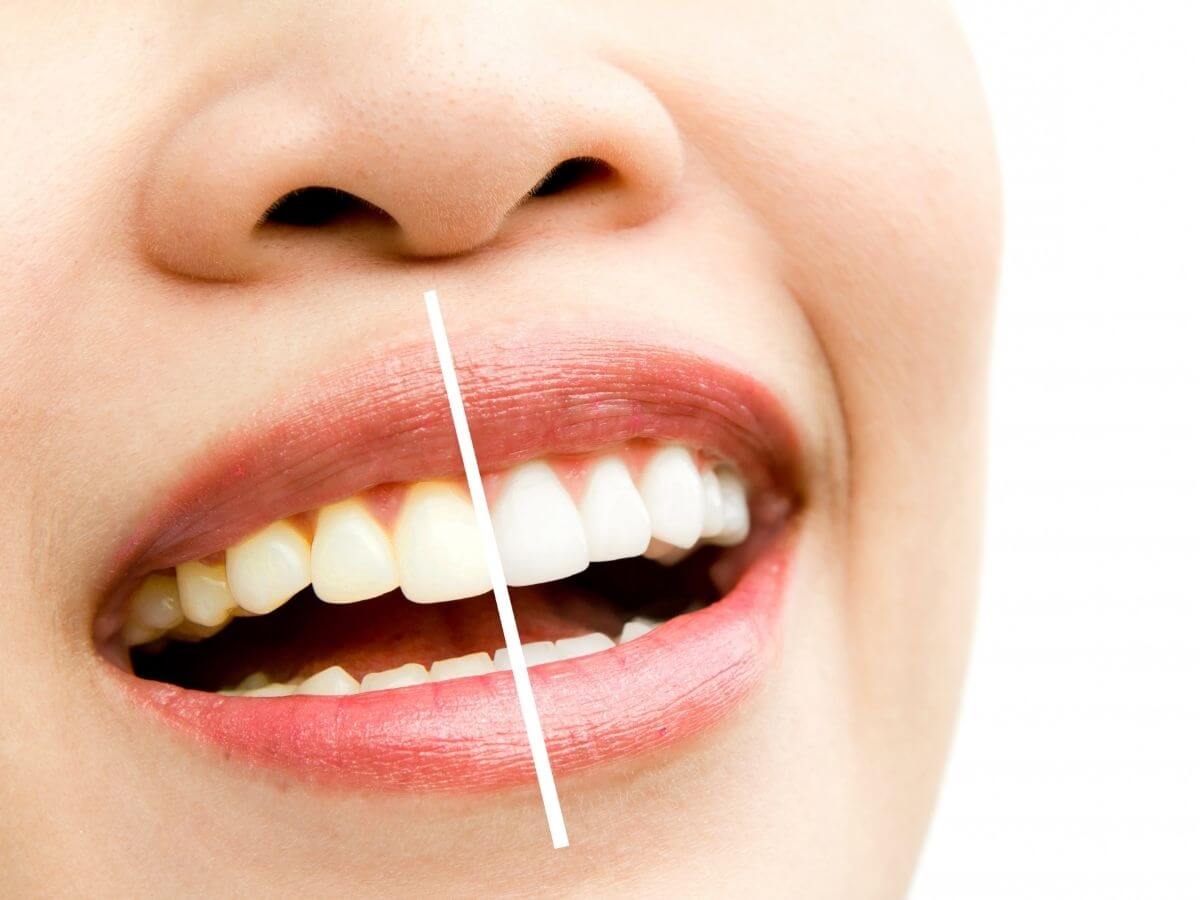
A dental veneer is a thin shell, usually porcelain or composite resin, bonded to the front surface of a tooth. Unlike a crown, a veneer doesn't wrap around the whole tooth, it simply improves what's visible from the front. Veneers are generally chosen for cosmetic concerns on teeth that are otherwise structurally healthy, such as staining that doesn't respond to whitening, chips, gaps, or minor shape and alignment issues.
Key Differences Between Crowns and Veneers
| Dental Crown | Dental Veneer | |
|---|---|---|
| Coverage | Entire visible tooth | Front surface only |
| Tooth preparation | More extensive, reshaped all around | Minimal, a thin layer from the front |
| Primary purpose | Structural restoration and protection | Cosmetic improvement |
| Typically used for | Damaged, decayed, or weakened teeth | Healthy teeth with appearance concerns |
| Durability | Generally 10 to 15+ years with care | Porcelain: 10 to 15+ years; Composite: 5 to 7 years |
| At Family Dental | RM800 to RM2,500 per tooth | Porcelain RM1,500 to RM2,200; Composite RM400 to RM800 |
What Materials Are Used for Dental Crowns and Veneers?
The material used also affects appearance, durability and suitability.
Dental crowns may be made from porcelain or ceramic, zirconia, porcelain-fused-to-metal (PFM), metal alloys or composite resin. Tooth-coloured ceramic options are often considered where appearance is important, while stronger materials such as zirconia may be considered for teeth exposed to heavier biting forces.
Dental veneers are commonly made from porcelain or composite resin. Porcelain veneers are laboratory-made and generally offer greater stain resistance and longevity, while composite veneers are applied directly to the tooth and can usually be completed more quickly.
Your dentist will recommend a material based on the tooth's position, bite, remaining tooth structure and aesthetic goals.
Crown vs Veneer: How Many Dental Visits Are Needed?
Treatment time also differs between the two options.
A dental crown commonly requires tooth preparation, an impression or scan, temporary restoration where required, and fitting of the final crown. Porcelain veneers are also typically prepared and fabricated before final bonding.
Composite veneers can often be applied directly to the tooth during a single appointment, depending on the number of teeth and complexity of the case.
Exact treatment time varies, so your dentist will confirm the expected number of visits after examining your teeth.
How Much Do Crowns and Veneers Cost?
At Family Dental, crowns are generally priced from RM800 to RM2,500 per tooth, with the exact figure depending on the material chosen, porcelain or ceramic for a natural look, zirconia or metal for added strength on back teeth, or a more affordable composite resin option.
Veneers are priced separately depending on material: porcelain veneers, which are custom-made and longer-lasting, are RM1,500 to RM2,200 per tooth, while composite veneers, sculpted directly onto the tooth in a single visit, are RM400 to RM800.
These figures are a helpful starting point, but your dentist will confirm the right option and exact cost once your tooth has been properly assessed.
Which One Do You Actually Need?
A simple way to think about it: if the concern is primarily about how a healthy tooth looks, staining, a small chip, a slightly uneven edge, a veneer is usually the more conservative and cost-effective choice. If the tooth itself has been weakened or damaged, by decay, a crack, significant wear, or a previous root canal, a crown is generally the more appropriate solution, since a veneer isn't designed to restore structural strength the way a crown is.
In some cases, a dentist may also recommend a crown for cosmetic reasons on a tooth that needs more comprehensive coverage than a veneer can provide, so a proper examination is always worth it before deciding.
Who May Not Be Suitable for Dental Veneers?
Veneers are primarily designed for cosmetic improvement and may not be suitable when a tooth has significant structural damage, active gum disease or other dental problems that need to be treated first.
Teeth grinding or clenching can also place additional stress on veneers and other restorations. If you grind your teeth, tell your dentist during the assessment so this can be considered when planning treatment.
A crown may be more appropriate when the tooth needs substantial structural protection rather than cosmetic coverage alone.
Frequently Asked Questions
Can a veneer be used instead of a crown to save money?
Not generally, if the tooth is structurally weakened. Veneers are designed for cosmetic improvement on healthy teeth, not to restore strength to a damaged tooth, so using one in place of a needed crown can lead to further problems down the line.
Do veneers damage the tooth underneath?
When properly placed, veneers are designed to preserve the underlying tooth structure, since only a thin layer is removed from the front surface. That said, any removal of natural tooth enamel is permanent, which is worth keeping in mind.
Which lasts longer, a crown or a veneer?
Crowns and porcelain veneers are both generally reported to last 10 to 15 years or more with good care. Composite veneers tend to have a shorter lifespan, generally 5 to 7 years.
Is a crown more painful than a veneer?
Both procedures are generally done under local anaesthesia and shouldn't be painful during treatment. Crowns involve more extensive tooth preparation than veneers, so there may be more sensitivity afterwards, though this varies by individual.
What happens to veneers after 20 years?
Some long-term studies show porcelain veneers can remain functional for 20 years or more, although survival rates vary considerably depending on the material, tooth condition, bite forces and patient habits. Over time, veneers may show wear from daily chewing and grinding, the bond holding them to the tooth can weaken, and tiny gaps can sometimes let bacteria in underneath, leading to hidden decay. They may also simply start to look mismatched as your natural teeth change shade with age.
The important thing to know is that replacing a veneer isn't quite as simple as the first time around, since a small amount of natural tooth is typically removed each time a veneer is redone, and enamel doesn't grow back. This is why choosing an experienced dentist and keeping up with regular checkups matters even more over the years.
Can a tooth still decay underneath a dental crown?
Yes. The crown itself cannot decay, but the natural tooth underneath and around the crown margin can still develop decay. Good brushing, interdental cleaning and regular dental reviews therefore remain important.
Can a veneer later be replaced with a crown?
In some cases, yes. If a veneered tooth later develops significant decay, damage or structural weakness, a dentist may recommend a crown instead. The decision depends on how much healthy tooth structure remains. Current Malaysian SERPs are already surfacing this as a common crown-vs-veneer question.
What happens to a crown after 20 years?
A crown still going strong after 20 years has genuinely outperformed the average lifespan, but it's at the stage where closer monitoring matters. Things to watch for include sensitivity to hot or cold, a crown that feels loose or sits slightly differently when biting down, a dark line appearing at the gum edge, or a persistent bad taste, any of these can signal that the seal around the crown has started to break down, sometimes allowing decay to develop in the tooth underneath without being immediately obvious.
This is why dentists generally recommend more frequent checkups and x-rays once a crown passes the 10-year mark, catching any issues early is much simpler than dealing with a problem that's had time to develop underneath.
Not Sure Which Is Right for Your Smile?
The best way to know whether a crown or a veneer suits your tooth is a proper look by someone who can assess the tooth's actual condition, not just its appearance. At Family Dental, we'll talk you through what's really going on with your tooth and which option genuinely fits your situation.
Contact us to book a consultation.